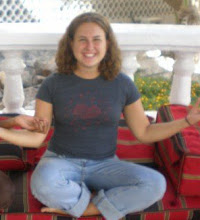
This past week, all the new environment volunteers came into town for "In-Service Training"; a chance to reflect on 3-months in village and practice some technical aspects of our job that were touched upon during our Pre-Service Training. We spend a few days learning about bees, harvesting honey, processing beeswax, and gorging on honey comb. Then we learned how to graft mango, citrus, and cola trees. We spent a whole day at a picturesque garden learning about composting, organic fertilizers and pesticides, and inter-cropping produce to maximize output. And we touched upon food security issues, seed collection, and woodlot production. I'm feeling extremely motivated to return to Jali, check out some hives, graft some mango trees, and build the perfect garden. Uh...maybe I should take it slow...But either way, I'm feeling confident that I can bring more skills and training to my village! I've been told not to set my expectations too high, but it's hard, and I'd like to think optimistically. At this point, I want to try everything I can! My job is to seek out motivated individuals, and at that point, I think the direction of my service will become clearer.
The day before I left for IST, I dedicated my whole day to collecting seeds for the Peace Corps seed exchange. But this day ended up being much more than a day walking around the bush trying to identify seeding trees. I ran into some boys I know from helping at the Upper Basic School (Grades 7-9) and asked them to help me find seeds. We found quite a few trees and spent a large part of the day sitting around, removing Flamboyant seeds from their hard shell casing. The boys, Kasam and Alamaso, were eager 9th-graders, preparing for their National Assessment Exams on 11 May, with dreams to play soccer, go to school on the coast, and move abroad.
That seems to be the dream of any young girl or boy: getting out of this country. Can you blame them? Job opportunities are few and far between. Who wants the same life as their parents, grandparents, and so on as subsistence farmers who can barely provide for themselves? I was always told growing up that I can do whatever I want to do if I work hard. But for Kasam and Alamaso, working hard will inevitably lead them back to Jali village or maybe selling cell-phone holders on the streets along the coast. We learned a lot about “brain drain” in my college development courses where “scholars” say that Africans continue to live in poverty because all the bright minds are leaving their home countries to pursue job opportunities abroad; that if they stayed in their home country to help build its infrastructure, poverty wouldn’t be as prevalent. I talked to Kasam and Alamaso about this idea; that Gambians should try to make their country better instead of wanting to leave. Kasam agreed, and said, so dignified, “I want my family to live a better life than me, so if I can find a job in Europe or America, and send money home, then maybe my kids will know how to make Gambia not poor.” He’s right, why not take advantage of an opportunity that most Gambians can only dream of, but when will this cycle end? Why can’t it be Kasam who changes this country around instead of his children? And what can be done to provide more Gambians with more opportunities?
My mind is constantly racing with ideas- day and night. “They could plant a huge fruit tree orchard and sell the fruits to tourists. Wait no! They can learn how to dry mangos and sell them during the off season! Yeah, wait, better yet, they grow thousands of cashew trees and then open up a cashew nut production factory…or…” This is why I’m so tired… but really, at this point, are these visions realistic? Probably not. Now, families are unable to grow enough to feed their families. Now this seems like a realistic goal and potential for opportunity. If we can improve crop yield, families may have the opportunity to sell their excess and make a profit. If families can make a profit, perhaps they can afford to send their kids to higher education. If their kids spend less time helping with farm chores and more time studying, their advancement potential is higher. If all farmers are producing better and more crops, perhaps they could export them- providing additional income and business opportunities for all.
Call me idealistic, yes, I know. But let’s just start with trying to feed one’s family. Development is a long process, even the term “development” is pretty loaded and such a western idea. Although I am living in a village and see problems and issues facing people, I am only here for 2 years. “Development workers” have lived here before me and they will live here after I leave.
All I can do is plant some positive seeds for improvement. Like all seeds, some won’t grow, others may grow for a few years and then fade away, and a couple may even grow to be big, sprawling mahogany trees. So why not just plant some and see what happens.
28 April 2009

This is my home
17 April
I've been staying in Jali village for about 3 months now. The Drammeh compound is where I eat all my meals. And the vast bush of the Kiang Region is where I've spent most my days working. Though, until recently, I still felt like a visitor. It was a few days before Easter, I was missing home, wishing I could spend the holiday back in Pennsylvania; laughing with my family and oodling over the dog. So I decided to trek up to Basse in Eastern Gambia to go to church and cook with some Peace Corps friends posted out east. It was great to cook American food, play cards, laugh about all there is to laugh about here, and spend such a special holiday with people I really care about. I returned back to site, in high spirits, and was blessed with an unexplainable feeling that this place, Kiang Jali village, in the Drammeh compound; is exactly where I belong. This is my home.
I came back from my 4-day Easter excursion with high spirits and ready to work! While I was gone, the men (finally) finished the fence for the women’s garden, 2 wells had been dug the desired 3-meters into the water table and 2 more were being worked on, and I was greeted with big smiles and genuine greetings from the villagers. Despite being exhausted from my journey (took an extra day because “sometimes transport is a problem in Kiang”), all I wanted to do was walk around, greet people, laugh, and talk about what a great village Jali is. My little host brothers saw me walking along the dirt path to the compound and their faces lit up with instant smiles as they ran around yelling in Mandinka, “Habie came! Habie came!” (That’s my Gambian name…) At that moment, I put down my backpack and nearly broke down in tears. My host mother came out, just as excited, and said, “you came home!” “Yes”, I replied, “I came home.
I've been staying in Jali village for about 3 months now. The Drammeh compound is where I eat all my meals. And the vast bush of the Kiang Region is where I've spent most my days working. Though, until recently, I still felt like a visitor. It was a few days before Easter, I was missing home, wishing I could spend the holiday back in Pennsylvania; laughing with my family and oodling over the dog. So I decided to trek up to Basse in Eastern Gambia to go to church and cook with some Peace Corps friends posted out east. It was great to cook American food, play cards, laugh about all there is to laugh about here, and spend such a special holiday with people I really care about. I returned back to site, in high spirits, and was blessed with an unexplainable feeling that this place, Kiang Jali village, in the Drammeh compound; is exactly where I belong. This is my home.
I came back from my 4-day Easter excursion with high spirits and ready to work! While I was gone, the men (finally) finished the fence for the women’s garden, 2 wells had been dug the desired 3-meters into the water table and 2 more were being worked on, and I was greeted with big smiles and genuine greetings from the villagers. Despite being exhausted from my journey (took an extra day because “sometimes transport is a problem in Kiang”), all I wanted to do was walk around, greet people, laugh, and talk about what a great village Jali is. My little host brothers saw me walking along the dirt path to the compound and their faces lit up with instant smiles as they ran around yelling in Mandinka, “Habie came! Habie came!” (That’s my Gambian name…) At that moment, I put down my backpack and nearly broke down in tears. My host mother came out, just as excited, and said, “you came home!” “Yes”, I replied, “I came home.
20 March 2009
KONG KONG!
How is the morning? Hope there are no troubles? Have you woken in peace? How are your people? Hope there are no troubles?
Greetings are essential to survival and success in The Gambia. You greet, and continue to greet throughout the day. No event is more important than a greeting. I like to spend at least an hour or two walking around each day just greeting people. It’s great to help me get to know people, find out people’s roles in village, and learn everyone’s name. In that respect, living in an area where families inter-marry has made life a bit easier on me. About 1/3 of the village’s surname is Sameteh, another 1/3 is Drammeh (including me), and you have 1/3 other names like Ceesay, Dibba, or Fatty.
There would be no way for me to give you a “typical” day for me here in the Peace Corps. I have no set work schedule or job description. As an extension worker, I am expected to determine community need, find motivated groups or individuals, and work towards goals we set together. People often complain that there are no opportunities to make money in the village, to some extent, they are right; infrastructure is lacking, resources are limited, and the educational system is poor; but I see so much potential in the people in my village to improve their lives. They don’t need thousands of dollars in aid money or a milling machine; they need to recognize this potential. As Margaret Mead said, “Never doubt that a small group of thoughtful, committed citizens can change the world. Indeed, it's the only thing that ever has.” I did not come here to change people or this culture, instead, I want to help people improve their own lives. Improvements don’t need to be world changing though, maybe learning how to dry mangos so you’re children can get vitamins all times of the year or planting a few trees.
The women’s garden in coming along nicely – slowly slowly (domanding domanding) – as we would say here in Gambia. The fence is almost finished, it was tougher to motivate the men to work than the women, but they promised to finish it on Thursday. We hired a contractor to put in three open wells, for now, so his crew will start on Monday. And, I’m trying to convince the women’s group to start a communal compost pile to improve the soil quality and ultimately increase crop yield with plant material, cow dung, urea, vinegar, and sugar. I’m really excited about this garden and other community gardens in my area. I’ve unfortunately seen so many defunct community gardens and am trying to work towards SUSTAINABILITY – what is going to last beyond my two years here and for decades to come.
My village had a woman’s training center for many years, but it hasn’t been used much at all for the past few years. At the group meeting, several women expressed interest in starting it up again. These could be the small group of dedicated individuals I am looking for! These women aren’t looking for fame or fortune – just to improve their situation. Maybe learn how to sound out words and simple math. My mind is racing constantly with ideas, projects, income-generating activities, health and environmental education classes…but I’ve got to remind myself, domanding domanding, we need to determine the community need and set realistic goals. It is exciting to be surrounded by motivated individuals and be able to work with women.
Gender roles and expectations has been one of those issues I’ve been struggling to understand and accept completely. As a feminist, one who belives men and women should be given equal opportunity, respect, and choices, it’s difficult to live in a culture where women are subservient to men. The woman do it all, all the cooking, cleaning, fetching water, working in the fields…the list goes on…But they say it’s part of their culture, part of their religion; that men are the “masters” because Allah/God gave women to man to serve them. But the women accept this, so if it is their choice, are they empowered? I’m having a hard time seeing the women as empowered and equally having a difficult time building trust and respect with the men because of this. I do not interject my opinion, but simply observe and learn, for I am living in their culture.
Culture differences definitly keep me laughing each and every day. One day last week, I wasn’t feeling too well- it was probably the oil in the bennechin- and I just wanted to rest and sleep it off. I told my host family that, and they gave me some traditional root medicine and said, “May God make you better.” I said thank you and went into my hut to sleep. In our culture, most friends or family members would check in one you once in a while, but give you space. But here, I had ½ the village coming to send there greetings and prayers. As soon as I would start to sleep another person would knock on the door, “KONG KONG!” (that’s what people say when they knock on your door). I would get out of bed, tell them I was starting to feel better and try to get back to sleep and then an hour later KONG KONG…at first it was frustrating, but I just had to laugh. They all have only good intentions. Got to learn to embrace the KONG KONG’s.
Today since I was in town, I bought a beesuit so I can start going out harvesting with some beekeepers and I’m really excited for all the little projects that have come up. I’ve started working in nearby villages with the women’s gardens. I can’t tell you for sure what the future holds for me in Jali village, but I can tell you that I am smiling everyday, learning the language – domanding domanding, and making great friends. Thank you all for your letters/emails/ etc. I am so blessed. Whenever you are feeling down, just remember how great each day is- the whole world is conspiring to shower us with blessings.
Greetings are essential to survival and success in The Gambia. You greet, and continue to greet throughout the day. No event is more important than a greeting. I like to spend at least an hour or two walking around each day just greeting people. It’s great to help me get to know people, find out people’s roles in village, and learn everyone’s name. In that respect, living in an area where families inter-marry has made life a bit easier on me. About 1/3 of the village’s surname is Sameteh, another 1/3 is Drammeh (including me), and you have 1/3 other names like Ceesay, Dibba, or Fatty.
There would be no way for me to give you a “typical” day for me here in the Peace Corps. I have no set work schedule or job description. As an extension worker, I am expected to determine community need, find motivated groups or individuals, and work towards goals we set together. People often complain that there are no opportunities to make money in the village, to some extent, they are right; infrastructure is lacking, resources are limited, and the educational system is poor; but I see so much potential in the people in my village to improve their lives. They don’t need thousands of dollars in aid money or a milling machine; they need to recognize this potential. As Margaret Mead said, “Never doubt that a small group of thoughtful, committed citizens can change the world. Indeed, it's the only thing that ever has.” I did not come here to change people or this culture, instead, I want to help people improve their own lives. Improvements don’t need to be world changing though, maybe learning how to dry mangos so you’re children can get vitamins all times of the year or planting a few trees.
The women’s garden in coming along nicely – slowly slowly (domanding domanding) – as we would say here in Gambia. The fence is almost finished, it was tougher to motivate the men to work than the women, but they promised to finish it on Thursday. We hired a contractor to put in three open wells, for now, so his crew will start on Monday. And, I’m trying to convince the women’s group to start a communal compost pile to improve the soil quality and ultimately increase crop yield with plant material, cow dung, urea, vinegar, and sugar. I’m really excited about this garden and other community gardens in my area. I’ve unfortunately seen so many defunct community gardens and am trying to work towards SUSTAINABILITY – what is going to last beyond my two years here and for decades to come.
My village had a woman’s training center for many years, but it hasn’t been used much at all for the past few years. At the group meeting, several women expressed interest in starting it up again. These could be the small group of dedicated individuals I am looking for! These women aren’t looking for fame or fortune – just to improve their situation. Maybe learn how to sound out words and simple math. My mind is racing constantly with ideas, projects, income-generating activities, health and environmental education classes…but I’ve got to remind myself, domanding domanding, we need to determine the community need and set realistic goals. It is exciting to be surrounded by motivated individuals and be able to work with women.
Gender roles and expectations has been one of those issues I’ve been struggling to understand and accept completely. As a feminist, one who belives men and women should be given equal opportunity, respect, and choices, it’s difficult to live in a culture where women are subservient to men. The woman do it all, all the cooking, cleaning, fetching water, working in the fields…the list goes on…But they say it’s part of their culture, part of their religion; that men are the “masters” because Allah/God gave women to man to serve them. But the women accept this, so if it is their choice, are they empowered? I’m having a hard time seeing the women as empowered and equally having a difficult time building trust and respect with the men because of this. I do not interject my opinion, but simply observe and learn, for I am living in their culture.
Culture differences definitly keep me laughing each and every day. One day last week, I wasn’t feeling too well- it was probably the oil in the bennechin- and I just wanted to rest and sleep it off. I told my host family that, and they gave me some traditional root medicine and said, “May God make you better.” I said thank you and went into my hut to sleep. In our culture, most friends or family members would check in one you once in a while, but give you space. But here, I had ½ the village coming to send there greetings and prayers. As soon as I would start to sleep another person would knock on the door, “KONG KONG!” (that’s what people say when they knock on your door). I would get out of bed, tell them I was starting to feel better and try to get back to sleep and then an hour later KONG KONG…at first it was frustrating, but I just had to laugh. They all have only good intentions. Got to learn to embrace the KONG KONG’s.
Today since I was in town, I bought a beesuit so I can start going out harvesting with some beekeepers and I’m really excited for all the little projects that have come up. I’ve started working in nearby villages with the women’s gardens. I can’t tell you for sure what the future holds for me in Jali village, but I can tell you that I am smiling everyday, learning the language – domanding domanding, and making great friends. Thank you all for your letters/emails/ etc. I am so blessed. Whenever you are feeling down, just remember how great each day is- the whole world is conspiring to shower us with blessings.
Pictures from Village!
 Here is a picture of the wall dividing the "parlor" from the "master bedroom". Notice the thatched roof with plastic to help stop the rain from getting in, pretty amazing!
 This is in the front room, directly to the right from when you come in the front door.
  This is on the opposite side of the front room/parlor. The truck has all my food in it, on the table are all my bowls and such and my water filter. My gas stove is on the floor.
This is my bathroom. My plush pit latrine and bucket for bathing. Do you really want to know what the kettle is for?

This is my backyard. The tree nursery is in the front, but the trees will be planted very soon! There are papaya and moringa trees planted along the straw fence!
 Here is the "master bedroom" or backroom. I have all my cards hanging up above my bed, but you can't see them!
Here is the water pump where I fetch water. Buba, my host brother is demonstrating how to use it...

Here is the pathway leaving the village. My friend Janke lives in the compound to the right and the water tower in the background is where I get cell phone reception and is a solar tank that supplies water to the whole village, except when it's cloudy.

Here is the mosque in the middle of the village and to the left is the bitik- or shop. The shop owner insists that everyone calls him "50 cent".

Some kids near my compound playing "jump the stick". Talk about making fun out of nothing!
 This is the goat that my family slaughtered for the naming ceremony for my new baby sister, Mariam Numi. Halimatu, my 4 year old sister in the front right is holding it's leg. I told her that was not safe and to put it down, but that made her cry.
 I love this picture of week-old Mariam Numi because she has one eye open!
 The neighbor women came over to help cook food for the village- porridge in the morning with sour milk, and then way-too-oily rice, called bennechin, and goat in the for lunch.
 Here are some of my friends pounding the shells off rice. Habie (my ntoma/namesake, because we have the same name), Mariam, and Geneba.
 Kebba Sameteh is squatting with little Abas, Halimatu is sitting, and Ousman is "brewing attaya", a strong china green tea that the men drink all day long. Don't drink it at night if you want to get to sleep at a reasonable time- it's highly caffeinated!
 Fatumata, my host mom, before she gave birth with little Ousman- 17 months old.
 Pretty typical afternoon cracking peanuts.
I couldn't teach anyone how to use my camera, so tried to take a picture of myself with Isatoo and Silifundi- my 2 neighbor friends.
 Women's garden site, the women gathered the water to make the concrete for the fence posts.
My host siblings Halimatu, Ousman, Alaigie, and Buba.
 Jali Bolong- the River Gambia- about 7 km from my village. BEAUTIFUL! I wish I had pictures of the mangroves!
 So, some fishermen in my village killed one of the most endangered species in the area- the manatee. Then they cut it up and we all ate it with our lunch the next day. Good, but very fatty.
09 February 2009
"The Gambia is on it's way to becoming the Silicon Valley of Africa."
That was a quote from a t-shirt I saw in village...
Wow! I've been in country for over three months already. Time flies by so quickly! Things are going SO WELL at my site. I'm loving the area- it's beautiful and the people are very friendly. My main job right now is to meet people and just get myself out there in village, so I usually walk around every day just sitting, chatting, and cracking peanuts with different families. I have cracked more peanuts in the past 3 weeks than you could ever imagine. I actually had to stop one day because my thumb became raw. But I've been making some friends and hanging out with my host family.
My host mother, Faatumatu is 7-8 months pregnant, so she's going to have a baby real soon! I'm SO excited for that- to have a newborn around. But she is still working so hard- women- oh man, they work hard! I taught the little kids in my compound how to make those paper fortune tellers, I thought, what a great idea, we can draw pictures in them and they are made of paper, so if they break, no prob...well, they were a BAD IDEA. I've had hundreds of kids wanting me to make them for them, and when the one's I've made rip, the kids are in tears. Maybe I'll just go back to thumb wrestling, after I regain feeling in my thumb from cracking peanuts that is ;)
The women's garden is going really well thus far! When I first got back to village, I informed the women's group that the funds were in the account and the fencing materials are on their way so we could start clearing the field. The next day, over a hundred women came out and the day after that, 150. We cleared 3.5 hectares of land in 2 days- amazing! I thought it would take weeks! The next week, everyone- men and women came out to build the fence, right now, it is almost finished, and this Thursday, we will complete it. Things always come up though- the fence was supposed to be finished last Thursday, but some babies were born and I think there were some funerals as well. Apparently, the well design that was originally decided upon is unreliable, so right now, we are looking into alternative options. I'm sure that will all work out in time. Domanding domanding- slowly slowly!
This weekend, I went camping on a beach in an area called Kartong. Delicious food, good company, swimming in the ocean, and sleeping in the sand. What else could I possibly ask for?! Life is good. Well, back to village tomorrow morning! I'll continue to write!
Take care!
P.S. I got a few emails/letters asking me if I got my head shaved...they just symbolically pretended to shave our heads at the naming ceremony, but I've been thinking about it! Having my head shaved would probably be nice in the hot season...hmm...Sorry to freak you out Grandma Rudick :)
P.P.S Here is a video from our swear-in ceremony! http://www.youtube.com/watch?v=Q3-dVJoAgkQ&feature=related
18 January 2009
Pictures from Training village to Swear in!
These pictures go from most to least recent:
 Annie and I.
 Training staff
 Kaiaf Village trainees/ PC family- best group EVER! Lyn, Me, Dave, and Jessi
 The new environment volunteers.
 My backyard - notice the amazing papayas and tree nursery! Not to mention the african mahogany pull-up bar ;)
 My new home at my permanent site and a goat.
 Naming ceremony in Kaiaf village- my new name is "Habsa". This is a village elder "shaving" my head- traditionally done to a new baby when they are named.
 Pounding rice to remove the shell casing.
 Some of my host sisters
 My Kaiaf host father- Bunja Koli and the ram we slaughtered for Tobaski.
 River Gambia- Janjanbureh Island
 River Gambia at Janjanbureh Island for our Environment technical field trip.

Alkaalo induction- all the women are wearing the same fabric- called a Sobe.
 At the ceremony to induct a new alkaalo- village chief. Dave, Lyn, Scott, and I.
 Some of my host siblings and I in training village- Sanne, Merro, and Omar.
 Annie and I.
 Training staff
 Kaiaf Village trainees/ PC family- best group EVER! Lyn, Me, Dave, and Jessi
 The new environment volunteers.
 My backyard - notice the amazing papayas and tree nursery! Not to mention the african mahogany pull-up bar ;)
 My new home at my permanent site and a goat.
 Naming ceremony in Kaiaf village- my new name is "Habsa". This is a village elder "shaving" my head- traditionally done to a new baby when they are named.
 Pounding rice to remove the shell casing.
 Some of my host sisters
 My Kaiaf host father- Bunja Koli and the ram we slaughtered for Tobaski.
 River Gambia- Janjanbureh Island
 River Gambia at Janjanbureh Island for our Environment technical field trip.
Alkaalo induction- all the women are wearing the same fabric- called a Sobe.
 At the ceremony to induct a new alkaalo- village chief. Dave, Lyn, Scott, and I.
 Some of my host siblings and I in training village- Sanne, Merro, and Omar.
17 January 2009
A donkey ate my homework!
So I have extended my stay in the Kombo district (city along the coast) by a few days to work out some logistics for a grant that the women's group is receiving in my village. Two of Jali's villagers came in to do some banking and to purchase fencing materials for the 3.5 hectare garden. Hopefully everything will go smoothly and we'll be back upcountry by Tuesday!
So I thought it would be fun to share some of my favorite Mandinka words and proverbs:
Yiri kuuto sii mee baa kono nonwonang a te kela noo bamboo ti.
A tree truck in the water will never be a crocodile.
Hooji koto hooji hoojita le bang?
How about our previous, secret arrangement?
Suumoolu lee? - How are the home people?
A be jang dorong - They are there only
Fo naato - Until later...
naamato - crazy person
ninkinanko - dragon - maybe not too useful, but a good icebreaker for the kids, Where is your dragon?
M niinata/ M ninaata - I am beautiful / I forget - It took me a while to learn that I was calling myself beautiful when I forgot someone's name...
fooleesuwo - bicycle or literally rubber horse
luumo- weekly market
silifando - gift from a traveller
kolyatta - difficult or expensive
This time of year, apparently until February, is the "cold season" in the Gam. It is probably about 70 degrees at night and in the early mornings, but if you only saw a picture of the villagers and their attire, you would think we were somewhere in Alaska. Knitted snow caps, blankets, wool sweaters, and even an occasional snow suit can be seen throughout the village. Don't ask me how they got them...
So I thought it would be fun to share some of my favorite Mandinka words and proverbs:
Yiri kuuto sii mee baa kono nonwonang a te kela noo bamboo ti.
A tree truck in the water will never be a crocodile.
Hooji koto hooji hoojita le bang?
How about our previous, secret arrangement?
Suumoolu lee? - How are the home people?
A be jang dorong - They are there only
Fo naato - Until later...
naamato - crazy person
ninkinanko - dragon - maybe not too useful, but a good icebreaker for the kids, Where is your dragon?
M niinata/ M ninaata - I am beautiful / I forget - It took me a while to learn that I was calling myself beautiful when I forgot someone's name...
fooleesuwo - bicycle or literally rubber horse
luumo- weekly market
silifando - gift from a traveller
kolyatta - difficult or expensive
This time of year, apparently until February, is the "cold season" in the Gam. It is probably about 70 degrees at night and in the early mornings, but if you only saw a picture of the villagers and their attire, you would think we were somewhere in Alaska. Knitted snow caps, blankets, wool sweaters, and even an occasional snow suit can be seen throughout the village. Don't ask me how they got them...
Subscribe to:
Posts (Atom)